



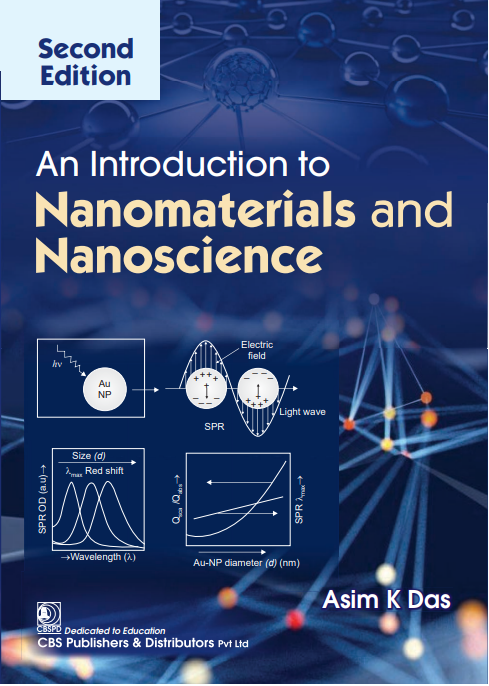
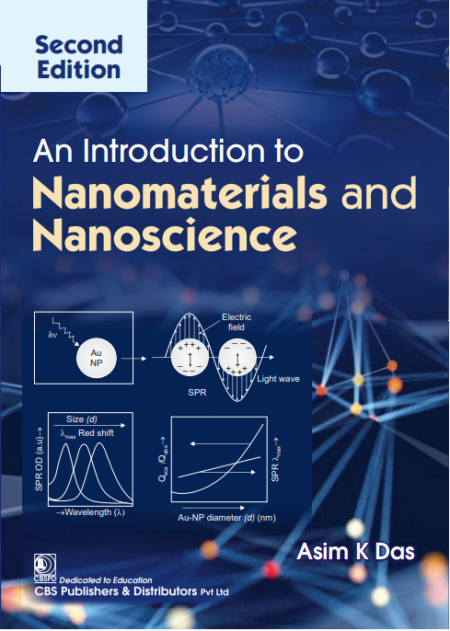
Highlights of the book Dimension of nanoregime Nanotechnology in the ancient days and nature Moore’s law and nanoelectronics Different types of nanomaterials—0D, 1D, 2D and 3D Bulk nanomaterials—nanocrystalline materials, nanocomposites, nanoporous materials, metal–organic frameworks (MOFs), porous organic polymers (POPs), inorganic–organic hybrid nanocomposites Quantum mechanics of low dimensional systems Quantum confinement (QC) effect Jellium model of metallic nanoclusters, magic sized nanoclusters–structural magic number vs electronic magic number Electrical properties—ballistic transport, Coulomb blockade Magnetic nanoparticles (MNPs) and superparamagnetism (SPM), magnetic data storage Surface properties,Wulf planes and crystallite shape Mechanical properties—Hall–Petch strengthening Stabilization of nanoparticles—electrostatic (DLVO theory) and polymeric (steric) stabilizations, properties of polymer solution: Good solvent, bad solvent, nonsolvent and theta state Nanoparticles: Semiconductors vs metals; silicon quantum dots (SQDs); carbon dots (CDs) Optical properties—fluorescent emission of semiconductor quantum dots and surface plasmon resonance (SPR) spectra of plasmonic metallic nanoparticles Nanotechnology of colour: Photonic crystals (PCs) and structure colour, semiconductor QDs, plasmonic metallic nanoparticles Core–shell nanoparticles (CSNPs) and their optical properties, gold nanoparticles (GNPs), gold nanoshells (GNSs), hollow gold nanoparticles (HGNPs) Carbon nanoworld—fullerenes, graphenes and their synthesis, carbon nanotubes and carbon dots (CDs) Synthesis of nanomaterials—vapour and solution phases; controlling of particle size distribution Characterization of nanomaterials—SPM, STM, AFM, SEM, TEM, XRD and crystallite size determination (Scherrer equation), EDX (EDS),AES, EELS, XPS (ESCA), XRF, XAS – XAFS, XANES, NEXAFS and EXAFS Application of nanomaterials and nanotechnology Possible hazards in the use of nanomaterials and nanotechnology


24 Support
+91 1234567890
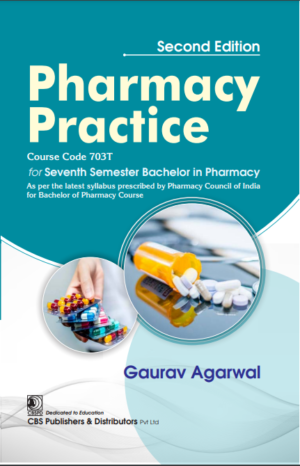
Pharmacy Practice for Seventh Semester Bachelor in Pharmacy
-20%₹265.00 ₹212.00

Colposcopy in Practical Gynecology
-20%₹1,345.00 ₹1,076.00





















Reviews
There are no reviews yet.